
The All-in-One Video Gallery plugin is 100% translation-ready and compatible with WPML. Since WPML is a premium plugin, alternatively, you can also use the Polylang plugin. This document will help you create a multilingual video gallery website using the Polylang plugin for free.
Note: Follow the steps below in the given order to ensure proper multilingual functionality.
- How To Setup Polylang
- Configure Videos, Categories & Tags as Translatable
- Translate Plugin-Generated WordPress Pages
- Translate Categories & Tags
- Translate Videos
- Translate Strings
1. How To Setup Polylang
To translate your All-in-One Video Gallery-based website with Polylang, you will need to install several plugins. Please follow these steps to proceed:
Step 1 – Navigate to Plugins → Add New Plugin from your WordPress Admin Dashboard. In the search bar at the top right, search for the following plugins:
Step 2 – Install all the plugins mentioned in the previous step.
Step 3 – Activate the Polylang plugin. This will activate the Setup wizard.
Setup Wizard
Step 4 – In the first step of the wizard (Languages), you can add the languages you need for your website. The first language you select will be set as the default. To add more languages, simply click the Add New Language button.
For our example, we will use English (primary), German and French languages:
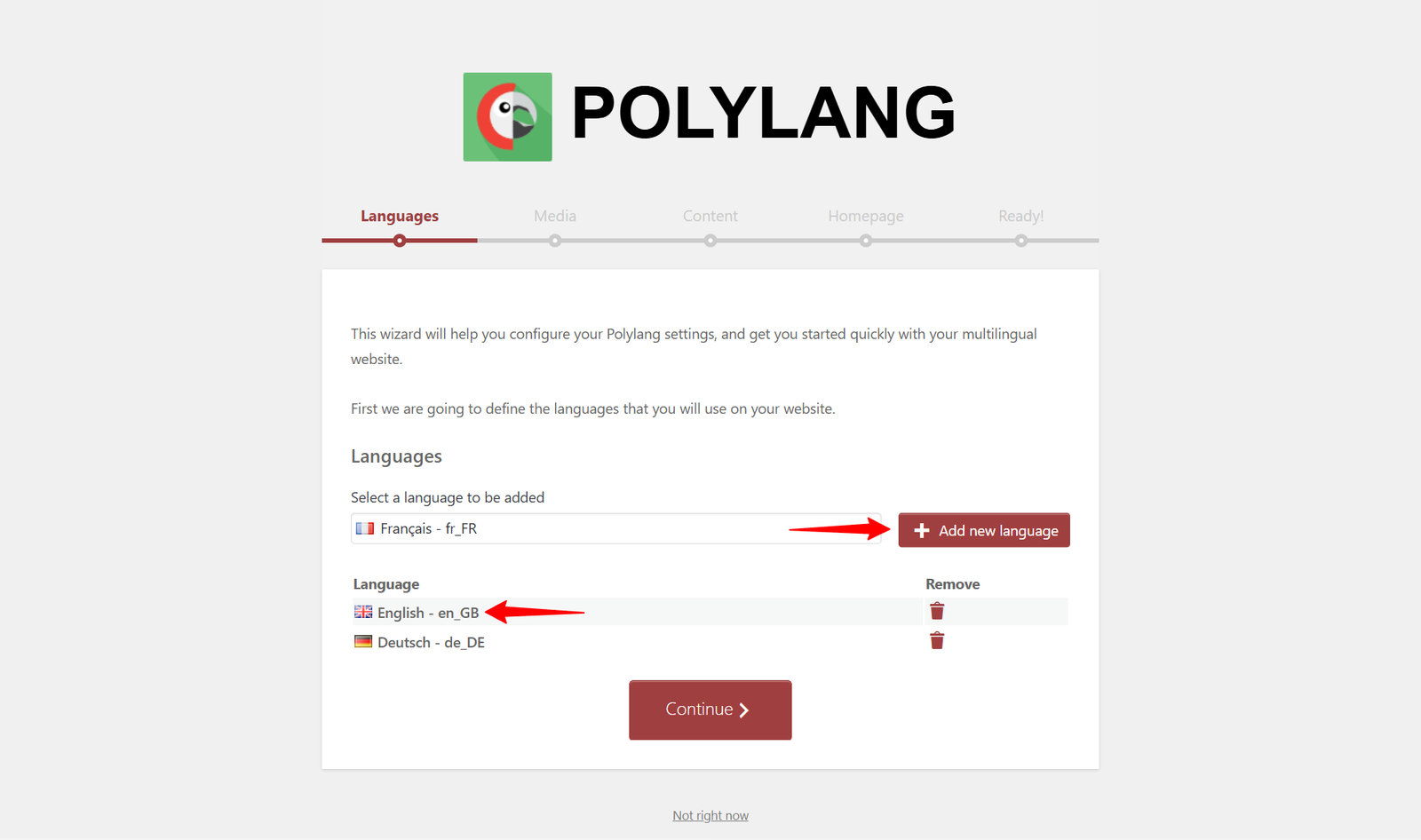
Once you have added all languages, click on Continue.
Step 5 – In the next step (Media), you can enable translations for media elements such as the title, alternative text, caption, and description.
Step 6 – Under Content, select the language to assign to all content without a specified language (this is usually your primary language).
Step 7 – In the next step, you can confirm your homepage translations. Clicking the Continue button will create blank versions of your homepage in all languages, meaning that neither your design nor content will be copied.
However, if you do not plan to have different designs for each language (i.e., a unique homepage layout for every language), click the Not right now button at the bottom.
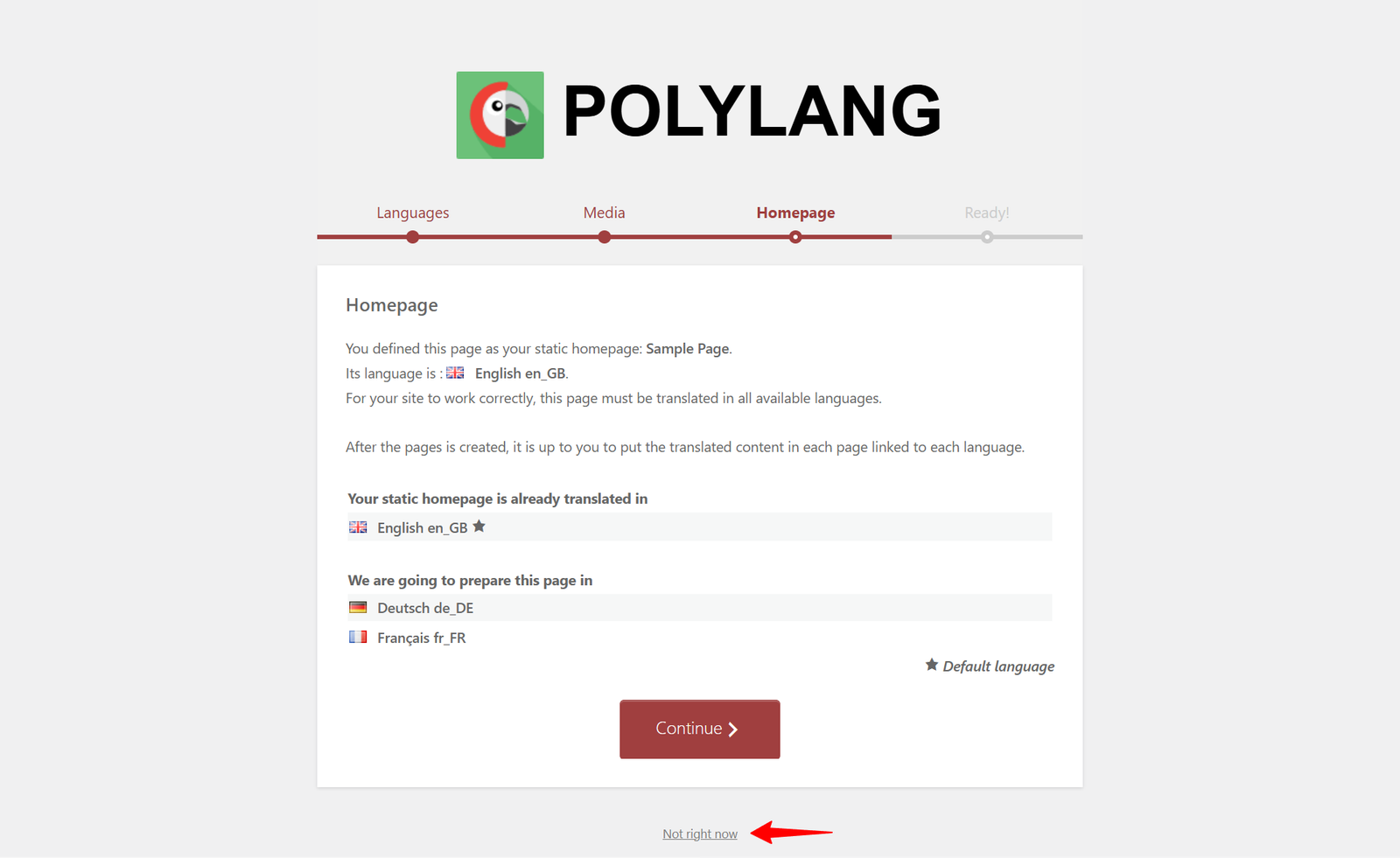
Step 8 – You will then be redirected to the Dashboard, where you will see an option to skip setup. Click this button to close the Polylang setup wizard—your previous settings will be saved.

The Polylang plugin is now set up, and additional languages have been added to your website. Now, we can begin translating our plugin content.
2. Configure Videos, Categories & Tags as Translatable
The next step is to enable our plugin’s post types and taxonomies on the Polylang plugin’s settings page.
- Navigate to Languages → Settings in your WordPress Admin Dashboard.
- Locate the Custom Post Types and Taxonomies section and click Settings.
- Select the checkboxes for:
- Videos (aiovg_videos)
- Video Categories (aiovg_categories)
- Video Tags (aiovg_tags)
- Click Save Changes.

Now, Polylang will add + icons in All Videos, Video Categories, and Video Tags pages, allowing you to translate them into different languages.
Before translating videos, we recommend first translating the WordPress pages added by our plugin during installation, as well as the Video Categories and Video Tags.
3. Translate Plugin-Generated WordPress Pages
During installation, our plugin dynamically adds a few pages to your website, which are used internally by the plugin. Below are these pages, which you can find under the Pages menu in your WordPress Admin Dashboard. Kindly translate them into all the languages of your site.
- Video Category
- Video Tag
- Search Videos
- User Videos
- Player Embed
- User Dashboard
- Video Form
- My Playlists
Note: Each of these pages (except Player Embed) includes a unique shortcode in the content. When translating, ensure that the shortcode is retained in the translated page.
Translating the Pages with Polylang
With Polylang, you might notice that your page or post content is not automatically copied to other language versions. When you add a new language version, it will create a blank page or post instead.
Unless you are using Polylang Pro (which includes a “Duplicate content” feature), we recommend using the Duplicate Page plugin.
Instead of manually adding content and designs for each language, you can duplicate pages or posts. Once the duplicated page is translated, simply link it to the original one, and you’re done.
As an example, we will show you how to clone our Video Category page and link different page versions. To start, make sure you activate the Duplicate Page plugin next to Polylang.
Let us show you how to do it:
- Navigate to the Pages menu in your WordPress Admin Dashboard.
- Click on the Duplicate This option under the page to clone it. You will see a new draft page appearing in the pages list with the same name.

- Click on the Edit option under the cloned (draft) page and adjust the page title.
- In the page settings (on the right side), scroll down to the Languages section and set the cloned page language. Here, we set the language to French.

- In the same section, connect this page with the original page. Just click on the original page language field and start typing the page’s title – click on the original page name once it pops out in the list.
- As you will notice, the cloned page contains the exact copy of the content found on the original page. Now you need to adjust and update content on your cloned page. You can translate the text and adjust the rest of your content and design as you wish.
- Click Publish to save.
Repeat this process for all pages and languages. You will use the same method to translate videos, as explained in a later section of this tutorial.
4. Translate Categories & Tags
The next step is to translate the categories and tags added using our plugin.

- Navigate to Video Gallery → Video Categories in your WordPress Admin Dashboard.
- You will see a Polylang language column with a
+icon for each category. - Click the
+icon under the desired language. - Enter the translated category name and click Add New Category.
Repeat this process for all categories and languages.
Note: Use the same steps to translate tags under Video Gallery → Video Tags.
5. Translate Videos
Now, it’s time to translate individual videos.
- Navigate to Video Gallery → All Videos in your WordPress Admin Dashboard.
- Follow the same steps outlined in the Translating the Pages with Polylang section above to translate the video pages.
6. Translate Strings
The final step is to translate the user input strings added through the All-in-One Video Gallery plugin’s settings pages.
- Navigate to Languages → Translations in your WordPress Admin Dashboard.
- Use the input fields to provide translations for custom text strings used in the plugin.

That’s it! Your All-in-One Video Gallery plugin is now fully multilingual with Polylang. Your videos, categories, and tags will display in the appropriate language for users, enhancing the accessibility of your video content.