
The All-in-One Video Gallery plugin is 100% translation-ready and compatible with WPML. This document will help you create a multilingual video gallery website using the WPML plugin.
Since WPML is a premium plugin, please make sure you’ve purchased the WPML license before proceeding.
Note: Follow the steps below in the given order to ensure proper multilingual functionality.
- How To Setup WPML
- Configure Videos, Categories & Tags as Translatable
- Translate Plugin-Generated WordPress Pages
- Translate Categories & Tags
- Translate Videos
- Translate Strings
1. How To Setup WPML
To translate your All-in-One Video Gallery-based website with WPML, you will need to install several plugins.
Install and Activate plugins:
Let’s see how you can download and install these plugins.
Step 1 – Login to your WPML account and download the following plugins from the Download WPML manually section:
- WPML Multilingual CMS
- String Translation

Step 2 – Login to your website backend and navigate to Plugins → Add New Plugin → Upload Plugin. Choose the plugin .zip file and click the Install Now button to install a plugin. Repeat this process for all the mentioned plugins.
Step 3 – Activate all installed WPML plugins.
Step 4 – When you activate the WPML Multilingual CMS plugin, you will see a notification in your Dashboard to start configuring WPML.
You can click the Configure WPML button on the notice or navigate to WPML → Setup. This will activate the Setup wizard.

Setup Wizard
The setup wizard will guide you through the whole multilanguage setup process and preparing your website for translation:
Step 1 – The first wizard option (Languages), is where you will add the languages you need. Choose your Default language. This is your primary language for your existing website content.
Next, you need to add all other languages you wish to translate your website to by clicking on the + icon. If you can’t find your language in the dropdown list, you can create a custom language.
For our example, we will use English (default), German and French languages:

Once you have added all languages, click on Continue.
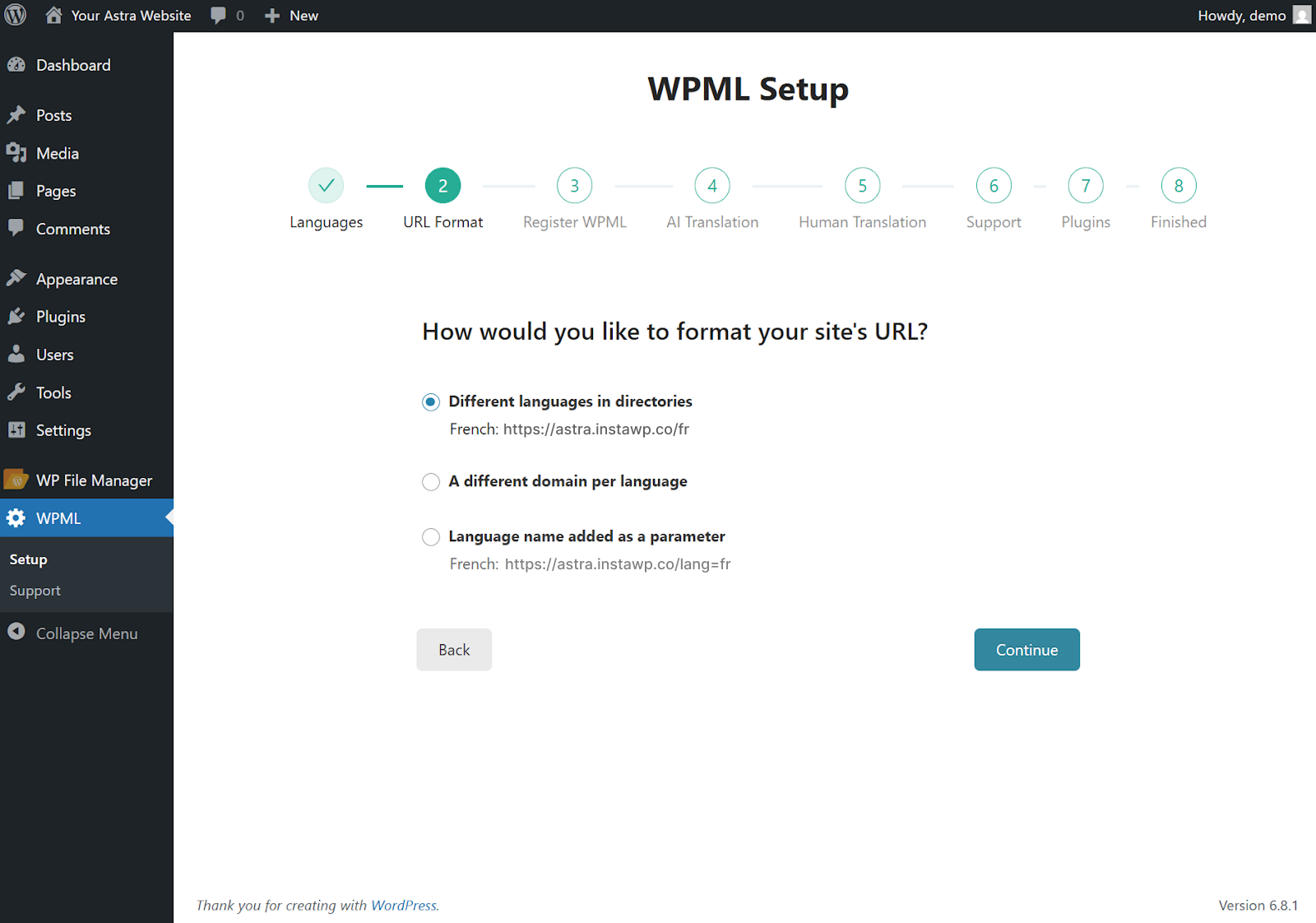
Step 2 – In the next step (URL Format), you need to decide how your URLs will appear for different languages — using different directories, different domains, or with added parameters.
Step 3 – On the third step (Register WPML), you need to add your Site key. You can find this by clicking the Get a key for this site link on the page. You will be redirected to the Sites page on the WPML website.

On the Sites page, click on the Add new site button. You will be asked to add your website URL and confirm if this is a development or production website.
Once you click on Finish, you will see a code. Copy this code to the wizard field on your website. Click Continue to move to the next step.
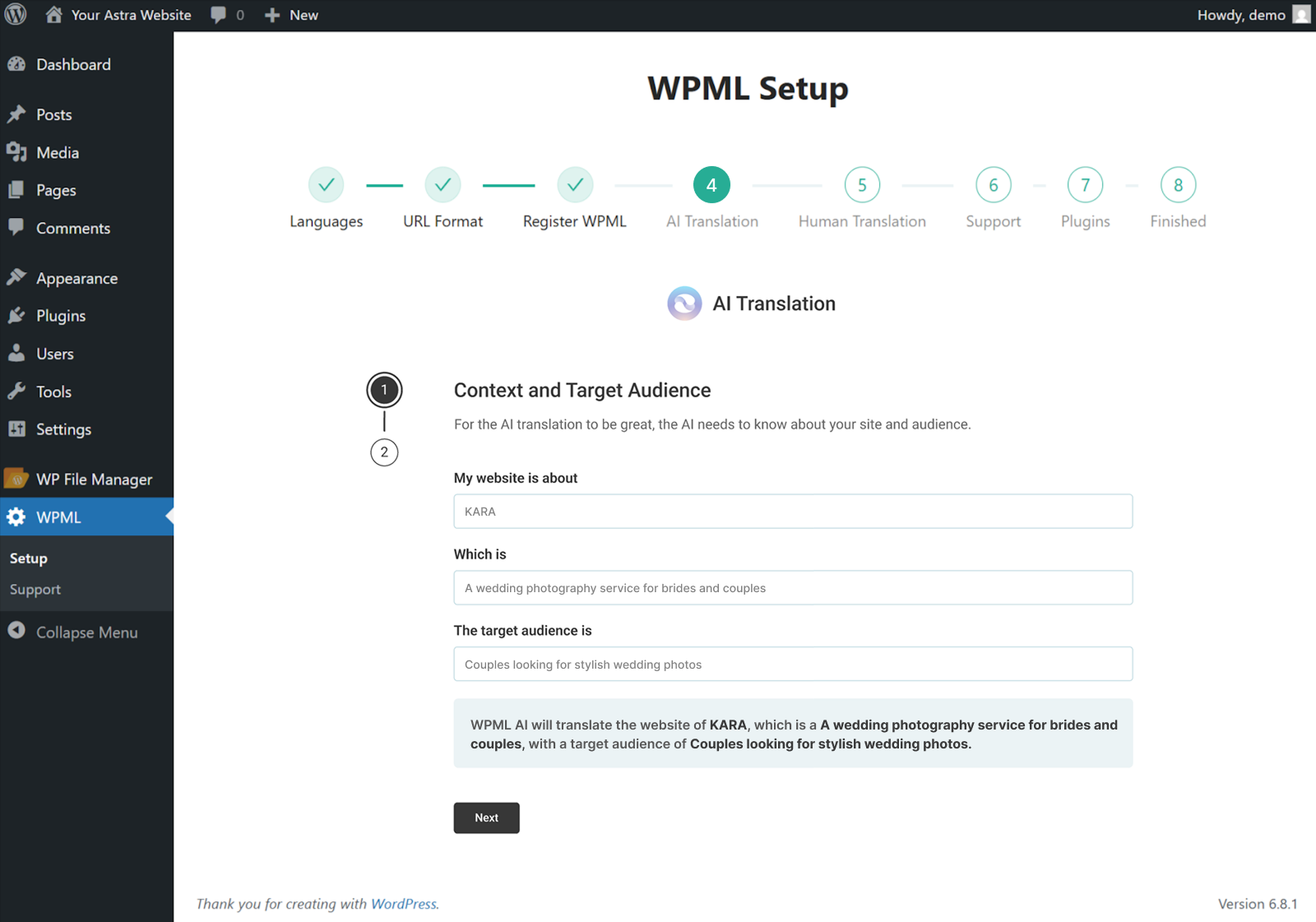
Step 4 – In the fourth step, you need to provide context about your website, such as what it’s about and who it’s for. This information will later help WPML create better automatic translations.
Step 5 – In the Translation Mode step, WPML selects Translate Everything Automatically with PTC by default and shows you the cost before anything is translated. Choose Translate Some: You Choose What to Translate if you prefer to pick the content yourself, as shown in this guide.
While AI translation is the recommended method for translating your website, WPML also lets you translate by yourself or with other users in the Human Translation step.
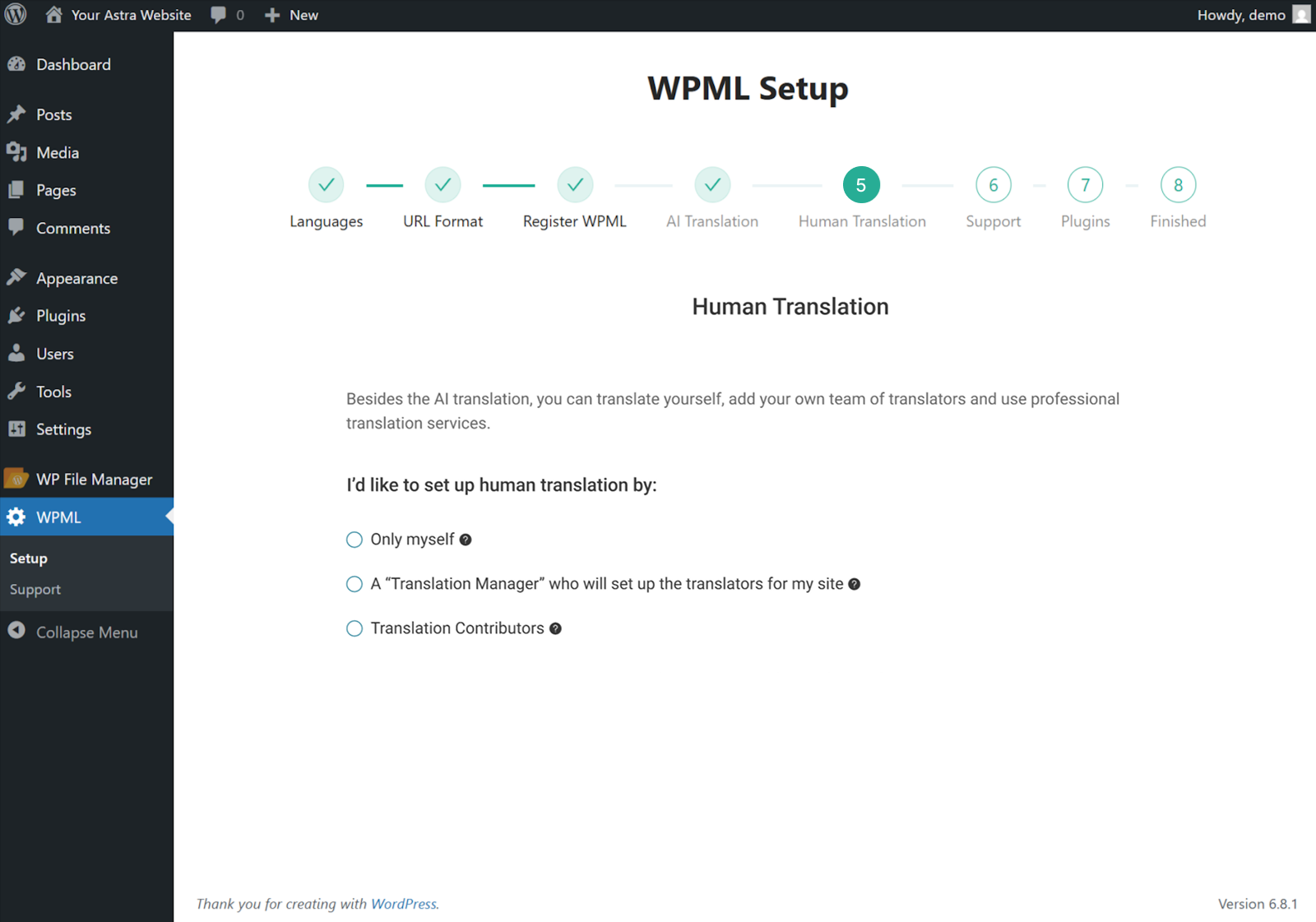
If you’re creating a website for a client, you can also set a Translation Manager to choose the options and assign the translators.
Step 6 – This step allows you to opt in to share your theme and plugin information with WPML to receive faster support and compatibility alerts.

Step 7 – If you’re running third-party plugins like WooCommerce or WPForms, the next step (Plugins) will recommend WPML components (if any). If you need these to be multilingual too, we recommend you add these components.
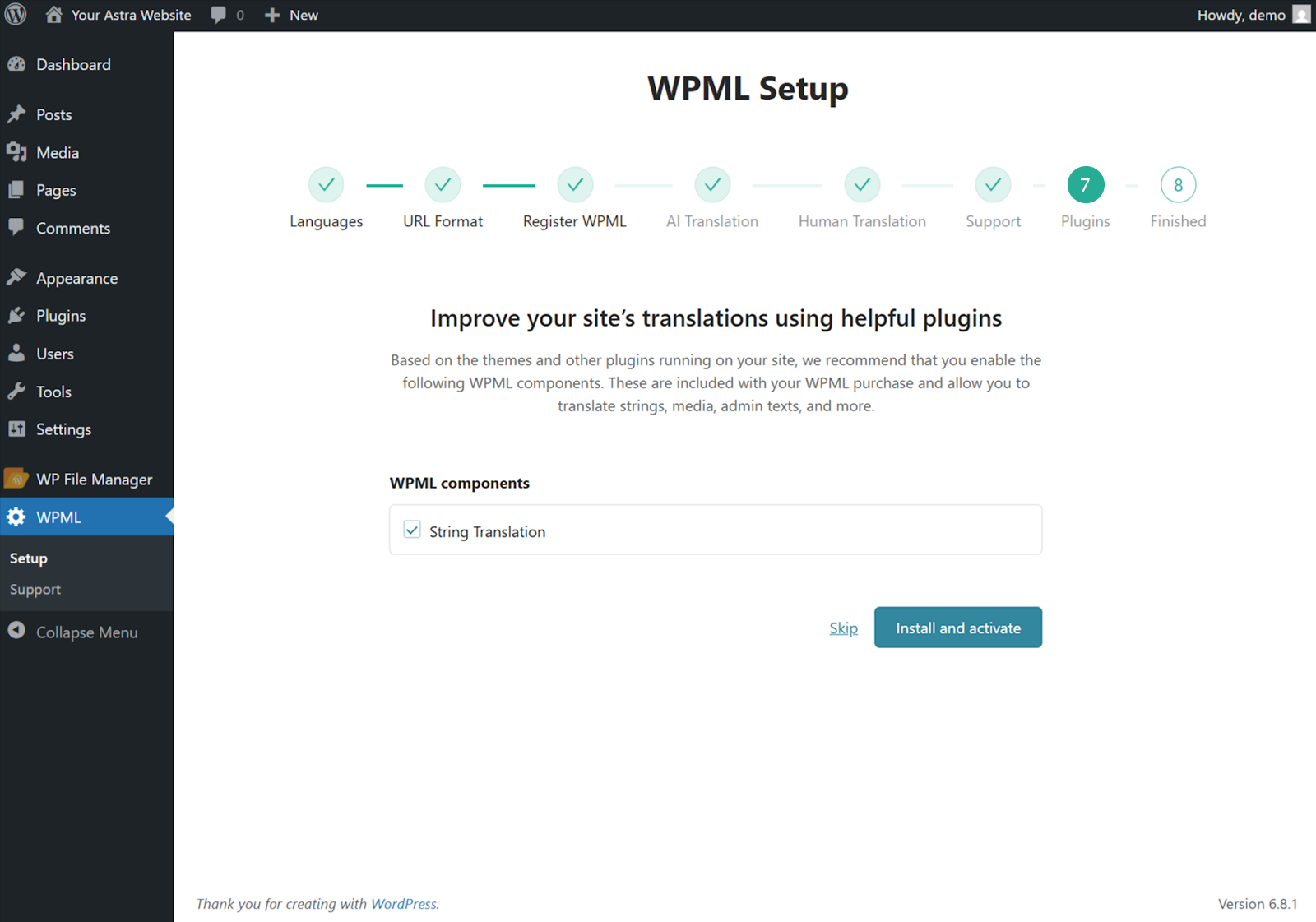
To install and activate these components (plugins), mark them in the list and click Install and Activate. Otherwise, click on Skip to move to the last step.
Step 8 – In the final step (Finish), WPML will add a language switcher to the bottom of your footer. You can edit or disable this one, and enable other language switchers by navigating to WPML → Settings → Language Switchers.
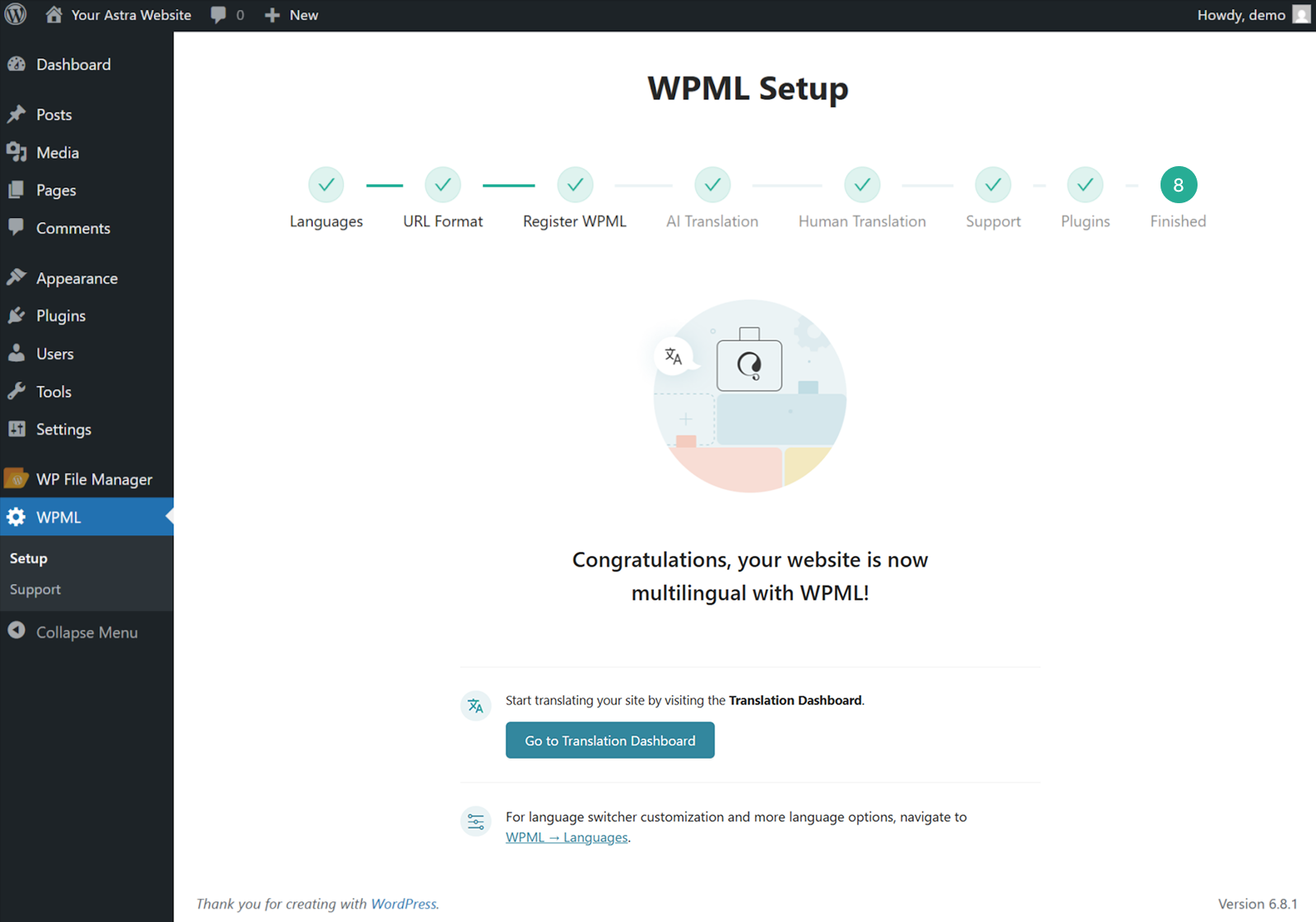
The WPML plugin is now set up, and additional languages have been added to your website. Now, we can begin translating our plugin content.
2. Configure Videos, Categories & Tags as Translatable
The next step is to enable our plugin’s post types and taxonomies on the WPML plugin’s settings page.
- Navigate to WPML → Settings from your WordPress Admin Dashboard.
- Locate the Post Types Translation section.
- Select Translatable for the Videos (aiovg_videos) option.
- Click Save.
Note: You would see there are 2 Translatable options. This is a WPML feature and you can choose any of the options that best suit your website setup.

Then, scroll down to the Taxonomies Translation section on the same page, select Translatable for the Video Categories (aiovg_categories), Video Tags (aiovg_tags) options, and click Save.

Now, WPML will add + icons in All Videos, Video Categories, and Video Tags pages, allowing you to translate them into different languages.
Before translating videos, we recommend first translating the WordPress pages added by our plugin during installation, as well as the Video Categories and Video Tags.
3. Translate Plugin-Generated WordPress Pages
During installation, our plugin dynamically adds a few pages to your website, which are used internally by the plugin. Below are these pages, which you can find under the Pages menu in your WordPress Admin Dashboard. Kindly translate them into all the languages of your site.
- Video Category
- Video Tag
- Search Videos
- User Videos
- Player Embed
- User Dashboard
- Video Form
- My Playlists
Note: Each of these pages (except Player Embed) includes a unique shortcode in the content. When translating, ensure that the shortcode is retained in the translated page.
When you translate pages or posts with WPML, you get linked versions of pages or posts where each version is assigned a language.
We will show you how to create the translated version of your page in just a couple of steps:
Step 1 – Navigate to WPML → Translations (Dashboard tab) and expand the sections with the content you want to translate. Select your items and scroll down to Step 2.
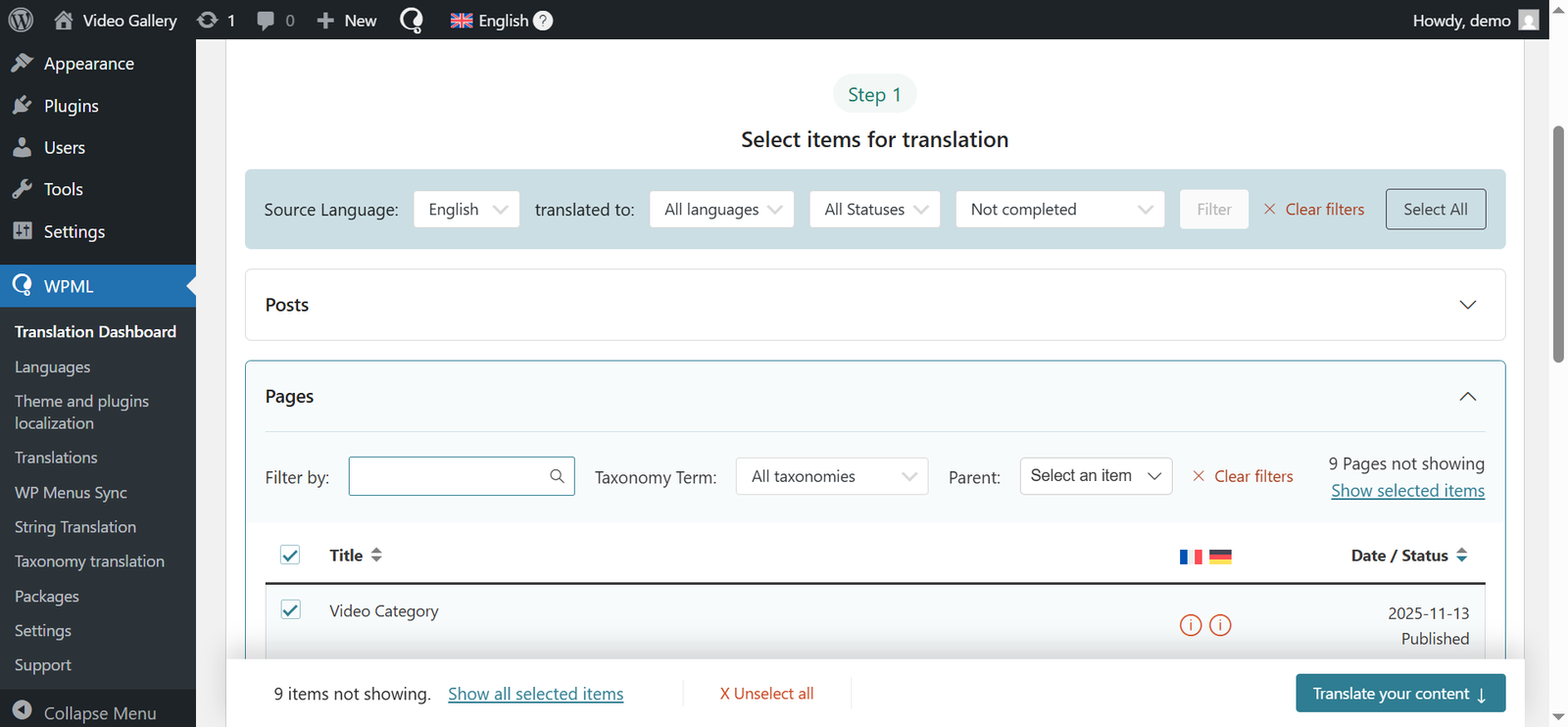
Step 2 -Choose the languages you want to translate into and select a translation method.
To get the best translations, we recommend translating automatically using WPML’s most accurate AI translator – Private Translation Cloud (PTC).
PTC is like your own team of expert translators with a deep understanding of your content and niche. It’s WPML’s proprietary AI technology, and even includes a translation quality guarantee: If you’re not satisfied with PTC’s translations, you’ll get a full refund.
When ready to begin, click the Translate your content button to start translating.

Reviewing Translations
Since PTC can create translations that are far better than professional human translators, you can skip the review process if you like.
If at any point you want to edit translations, just go to WPML → Translations → Translation Tasks and open the page you translated.

This will open a front-end editor which shows you what translations will look like on your website. If at any moment you’re unsatisfied with the quality, just click the Edit translations button to make changes.
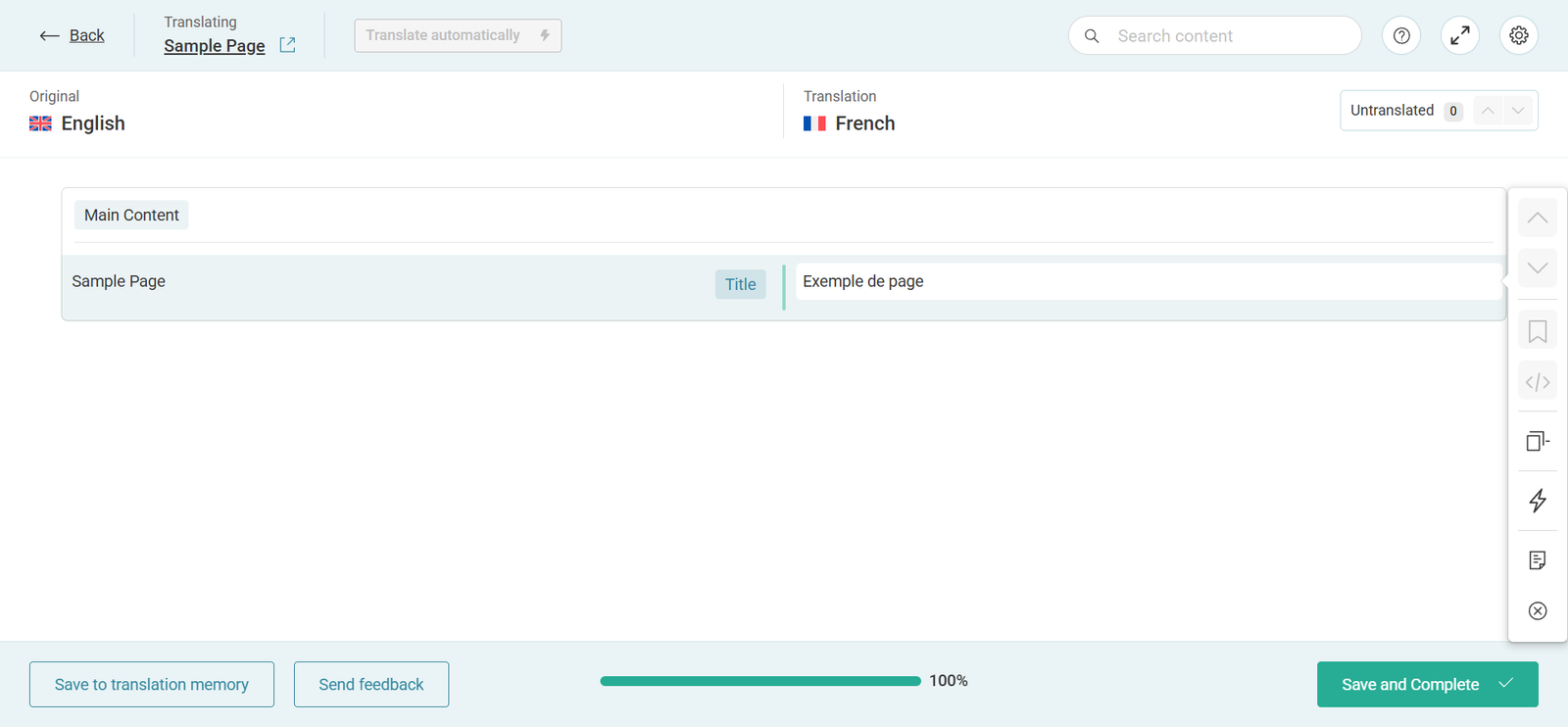
Once you’re done reviewing, click the Complete Translation button to publish translations. Your content will now appear translated when switching languages on your site.
4. Translate Categories & Tags
The next step is to translate the categories and tags added using our plugin.
- Navigate to WPML → Translations from your WordPress Admin Dashboard and open the Taxonomy tab.
- Select Video Categories from the Select the taxonomy to translate: dropdown.
- Use the
+icon to translate the categories. - Finally, switch to the Hierarchy Synchronization tab and click the Update Taxonomy Hierarchy button if available.

Follow the same steps to translate the Video Tags. Note the Video Tags will not have the Hierarchy Synchronization tab and this is normal.
You can also edit the translations of our plugin categories under their own pages:
- WordPress Admin Dashboard → Video Gallery → Video Categories
- WordPress Admin Dashboard → Video Gallery → Video Tags
5. Translate Videos
Now, it’s time to translate the videos.
Navigate to Video Gallery → All Videos from your WordPress Admin Dashboard. You will see the WPML language options for each video. All videos are in your default language, and the column displays flags representing the available languages.

To create a video version in another language, click the + icon in the desired language column. This will open the Advanced Translation Editor, allowing you to translate line by line.
By default, the editor opens in “dual” mode, displaying the original content on one side and the translation fields on the other.

To translate a line of content, click on the corresponding translation field and enter the translation. Once all translations are added, click Complete to create the translated video page.
Please note that the Complete button will only be available once all translations are provided. If you need to pause your translation, simply click the Back to list button—this will save your progress and return you to the video list. To indicate that the translation is in progress, the + icon will change to a “cogs” icon. You may resume translating at any time by clicking this icon.
Once you have completed your translation and clicked the Complete button, the translated version of your video page will be automatically added and linked to the original. Existing translations are indicated by a “pencil” icon instead of a + icon, signifying that a translation already exists.
On the front end, your design will be automatically retained, while the original content will be replaced with the translated version.
You can now repeat these steps for all videos and languages as needed.
6. Translate Strings
The final step is to translate the user input strings added through the All-in-One Video Gallery plugin’s settings pages.
- Navigate to WPML → Translations from your WordPress Admin Dashboard and open the Strings tab.
- Use the
+icon to translate each user-defined strings.

That’s it! Your All-in-One Video Gallery plugin is now fully multilingual with WPML. Your videos, categories, and tags will display in the appropriate language for users, enhancing the accessibility of your video content.